One door for every agent action.
A control plane in which nothing touches the outside world except through a single authorization path. The rule is enforced in application code and again by the database itself, so a bug in one layer cannot quietly bypass it.
- Architect and sole engineer
- Sep 2026 – present
- Live — internal production
- Agent identity & grants · Guardrails · Audit · Multi-agent orchestration · LLM gateway · Durable state
The problem
AI agents and automated providers can act on real systems faster than any human can review — and most stacks cannot prove, after the fact, who authorized what.
Beyond the console
Titan on every screen.
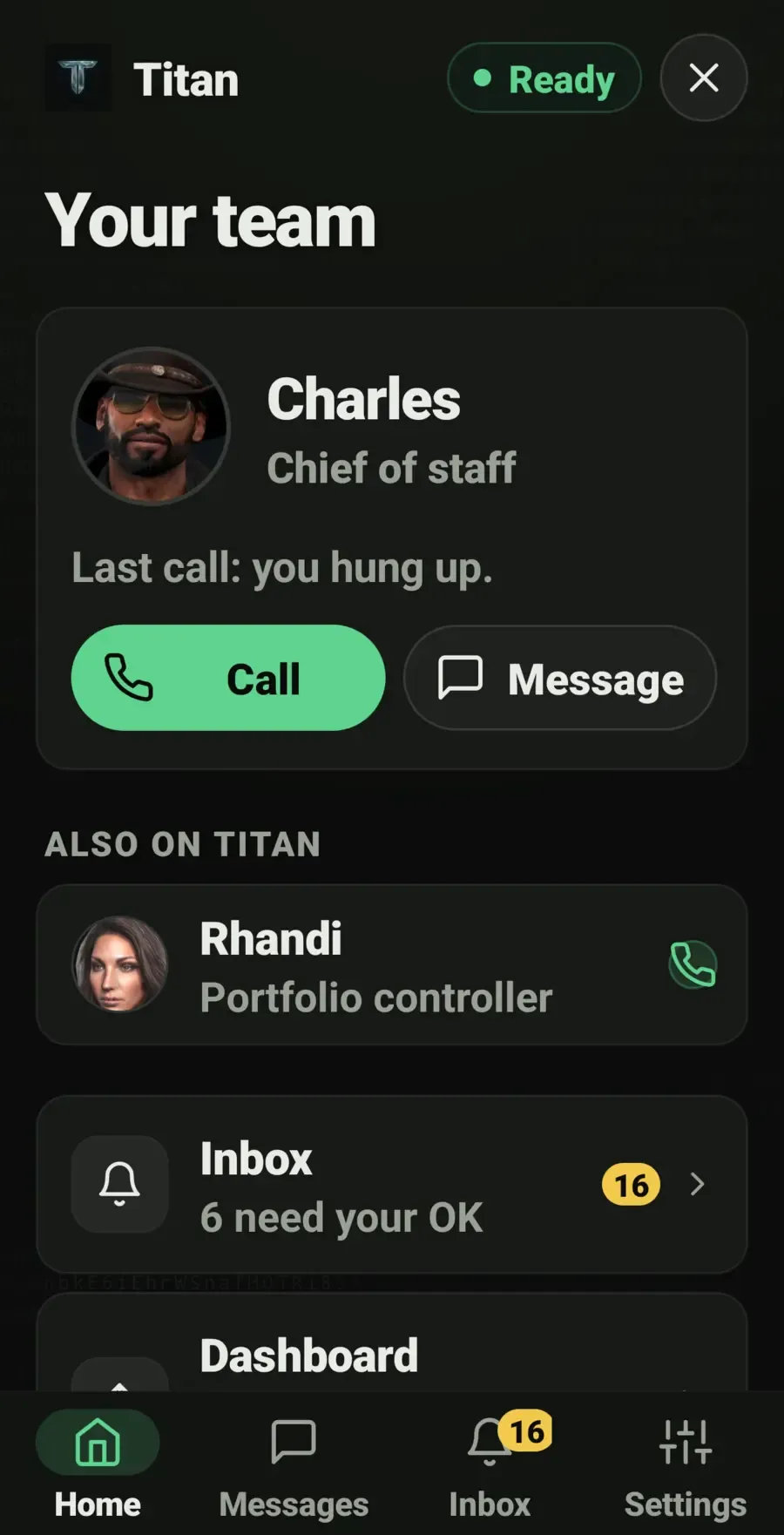
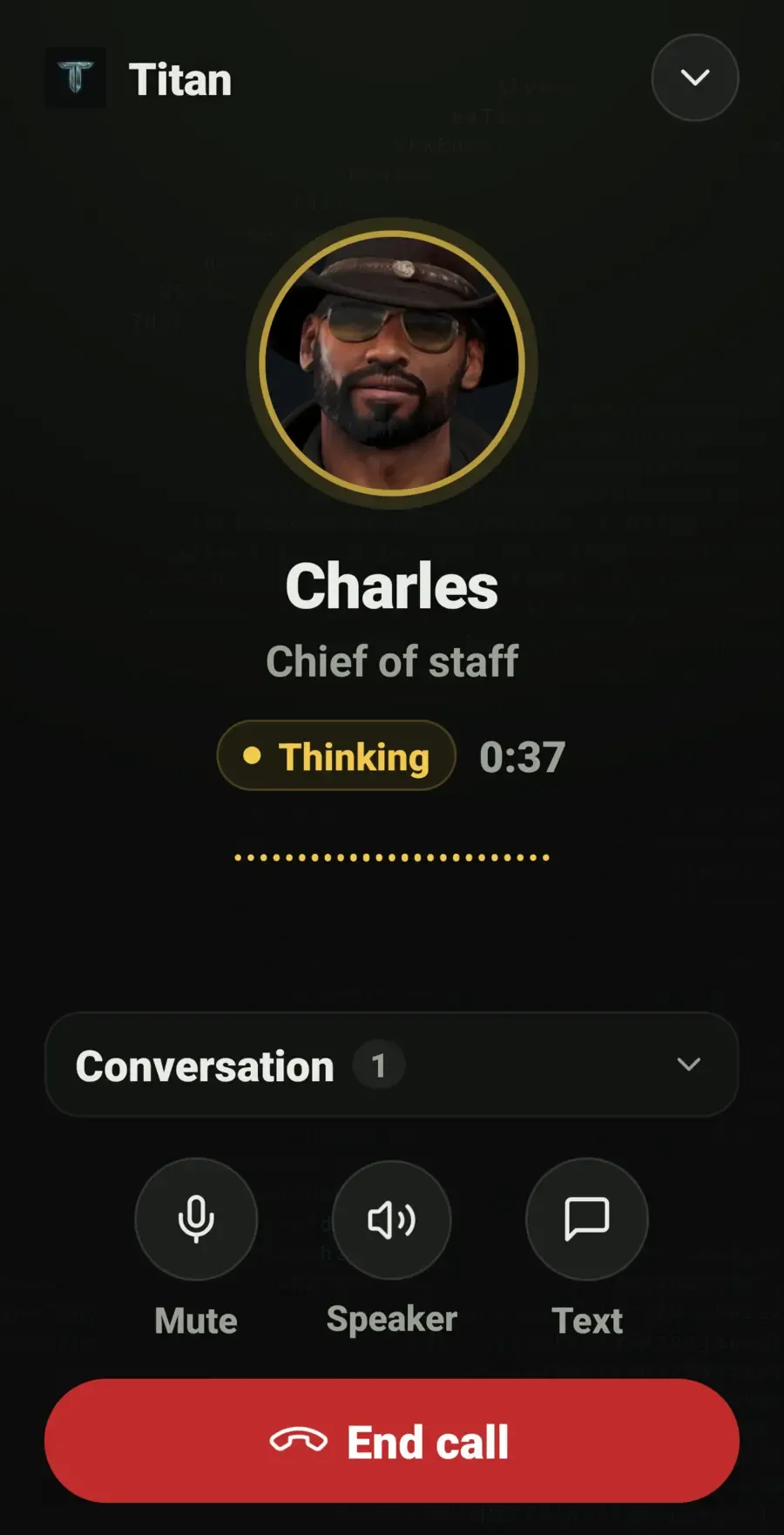
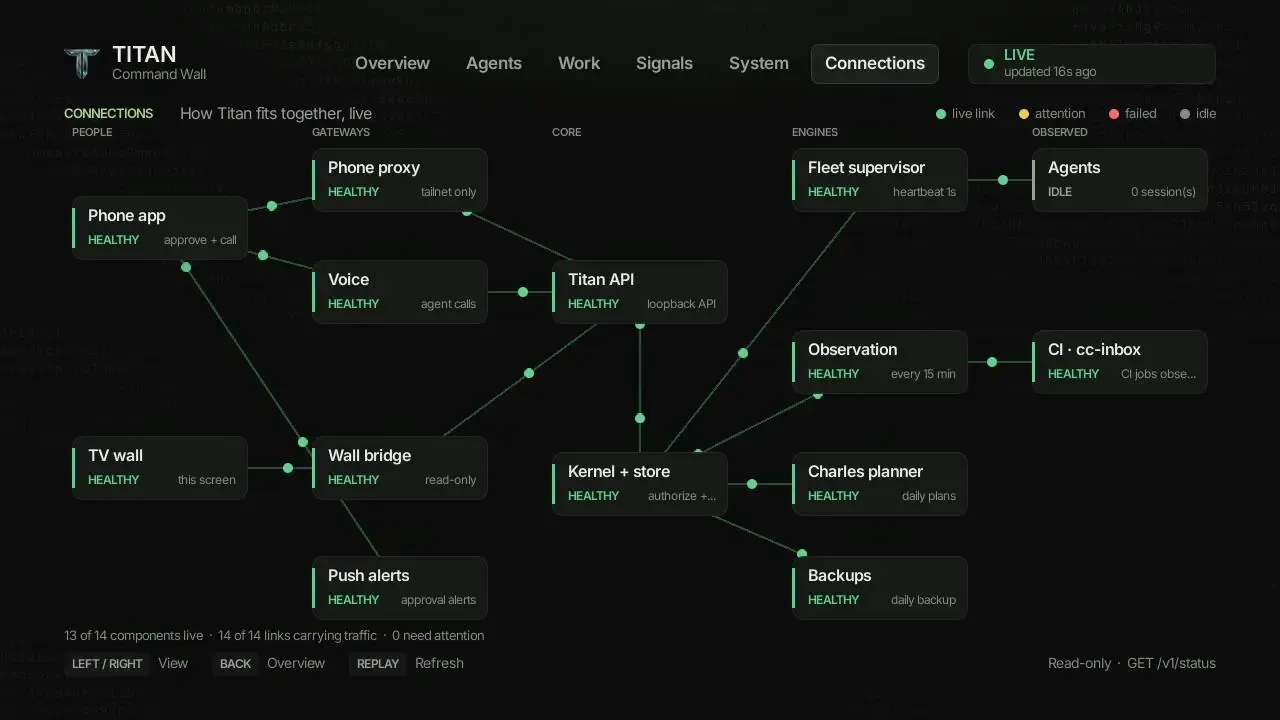
The same control plane reaches the operator wherever they are: a phone app for voice calls and passkey-signed approvals, and a read-only command wall on the living-room TV. Neither surface can do more than its job — the phone can approve or decline, the wall can only read.
A wall that can only look.
- A small bridge polls a fixed list of Titan’s loopback read routes; nothing is written back.
- The TV holds a bearer token for one endpoint — GET /v1/status — and nothing else is served.
- Every feed state is explicit: LIVE, PARTIAL, STALE, OFFLINE. Unknown values show “?”, never zero.
- Phone writes are limited to approve and decline, each signed with a passkey; the proxy and Titan’s write door both refuse anything else.
Connections
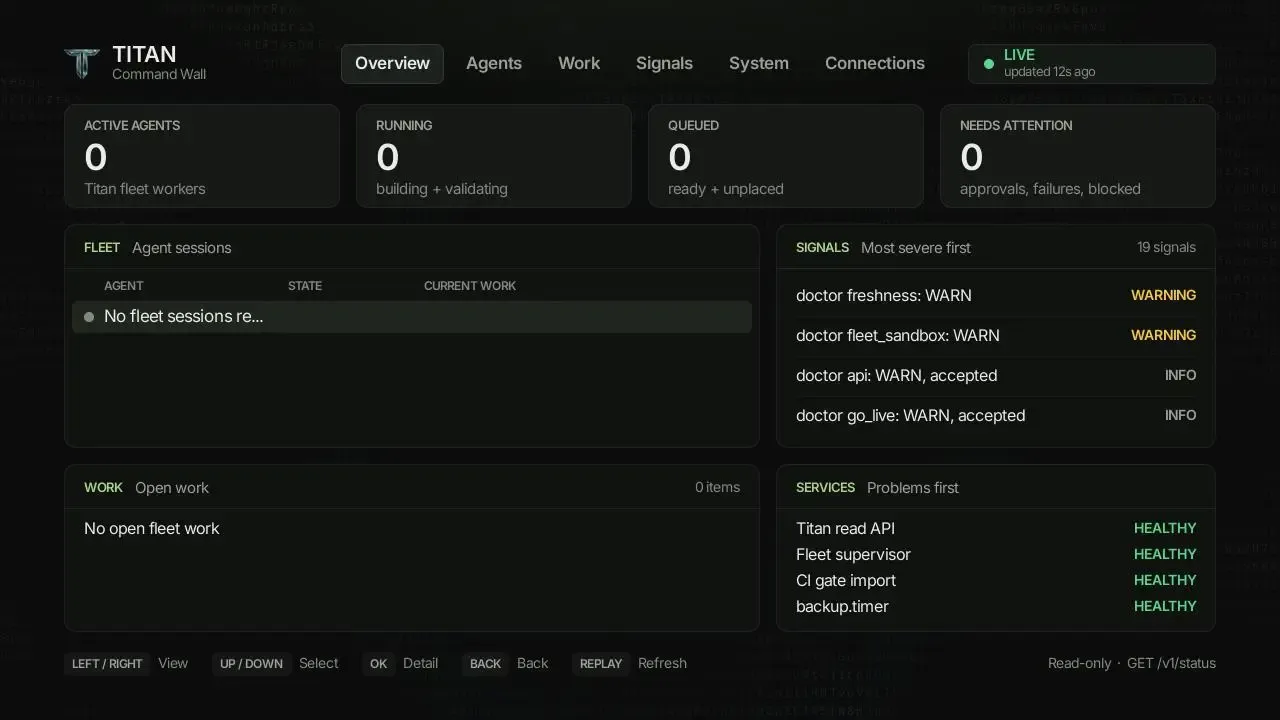
How it all fits together.
Every part of Titan and how data moves between them — the same map the TV wall shows on its Connections screen. Hover or tap a component to trace its links.
Snapshot of live state captured 2026-11-26: Titan only listens on its own machine, so this page can’t read it in real time. The TV wall shows the same map live, refreshed every 20 seconds.
What I did
- Designed the kernel: authorization, identity, audit and explicit state machines over a single store.
- Bound each human grant to the agent’s exact launch command, so an approval cannot be reused for a different action.
- Built the agent fleet: coding agents run in isolated git worktrees and terminal sessions with an orchestrator/worker mailbox.
- Built an inference gateway that keeps real model credentials outside the agent sandbox and verifies each caller’s identity at the OS level.
Key decisions
Enforce the authorization gate in the database as well as in code
A second, independent enforcement layer means a refactor, a new provider or a careless script cannot create an un-audited path to the outside world.
Treat UNKNOWN as a failure, not a pass
Models without measured quality are refused by the router; actions without a declared verification probe cannot be marked verified.
Single SQLite store with WAL and triggers instead of a distributed stack
One operator, one host: the simplest store that gives transactional invariants beats infrastructure that would need its own operations team.
Evidence
10,000+
Titan’s change log records a suite of more than 10,000 passing automated tests.
Test cases the project runner reported as passing in its own log; single-operator internal system. Source: Titan project change log (10,194 passed); suite not independently re-run for this site.
59 / 61
Titan enforces its single authorization path in code and again in the database: 59 of its 61 schema migrations carry ABORT triggers or constraints.
Migration files containing RAISE(ABORT) triggers, out of all migration files at the 2026-11-23 snapshot. Source: Titan repository migrations directory (repository-intelligence audit).
Outcome & limits
- Running daily as the operator console for an agent fleet, with services and timers under systemd.
- Every consequential action passes one audited door with schema-level enforcement.
- Single-operator system; no external users yet.
- The verification leg is enforced as a constraint but no live action type has yet been declared with a verification probe.
- The fleet launcher is an attributed port of an Apache-2.0 orchestrator; the governance around it is original.
Stack
- Python 3.12
- SQLite (WAL, triggers)
- systemd
- tmux
- Claude Code / Codex CLIs
- React + Astro dashboard